
128: Notes From Berlin
Hello, welcome to Border Crossing issue one hundred and twenty eight. Thank you for reading.
This issue, notes from Berlin, a place that’s gone from being on the edge to being in the middle.
Let’s get on it.
xx
gems
1
Dua Lipa interviews Albanian academic and author Lea Ypi about her acclaimed memoir Free, for Service95.
2
Georgia Davies, bassist from The Last Dinner Party, has launched a newsletter about food and touring, and it turns out she’s an excellent writer with a solid hint of Bourdain in her style.
3
Olga Koch has put her 2024 stand-up special ‘Comes From Money’ up on YouTube. I still don’t get why she’s not super-famous.
4
Iain Sinclair’s dense, otherwordly essay ‘Bad Magic’ for London Review of Books, on the painter post illusionist Brion Gysin and the impact of his cut up phrases.
5
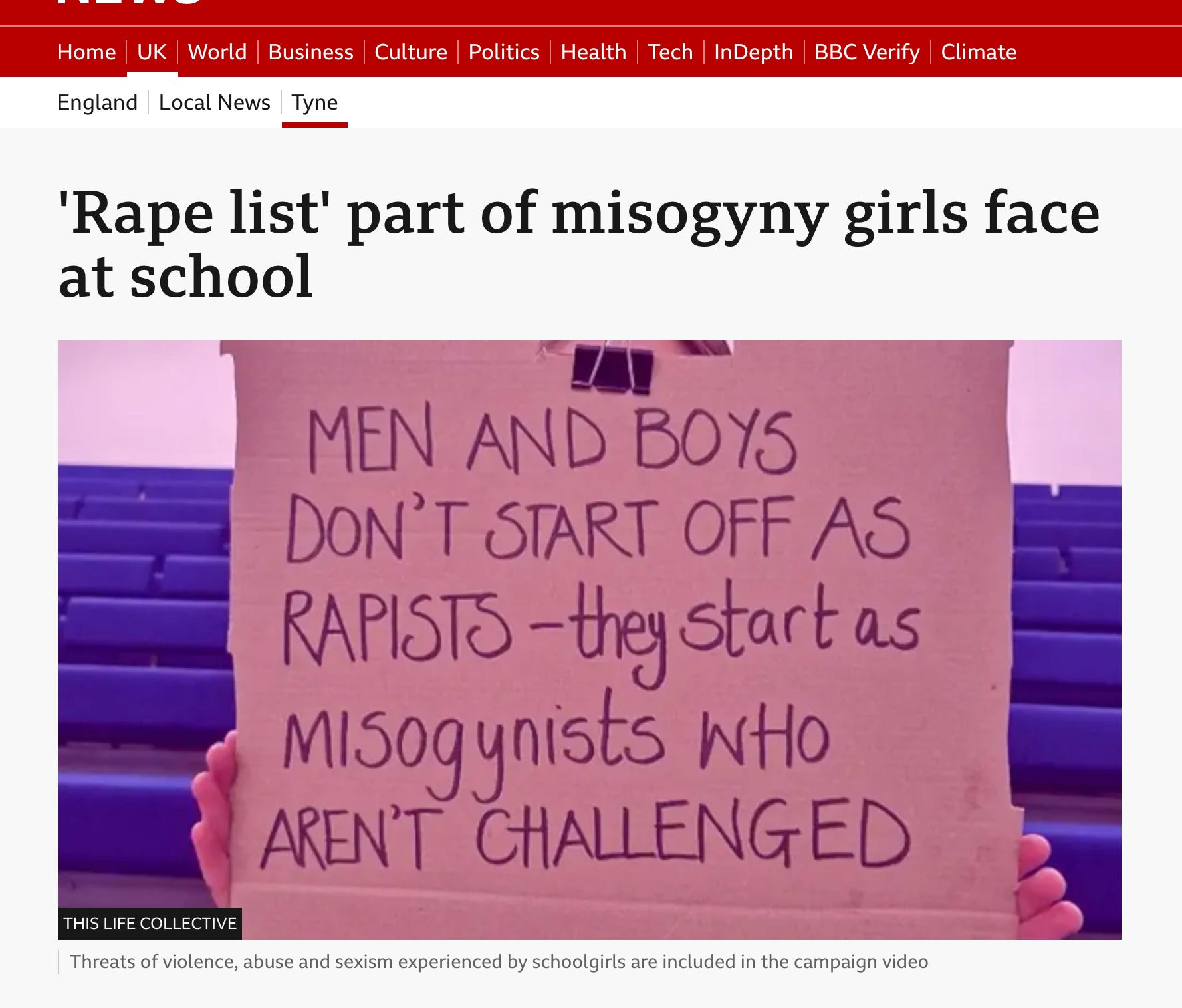
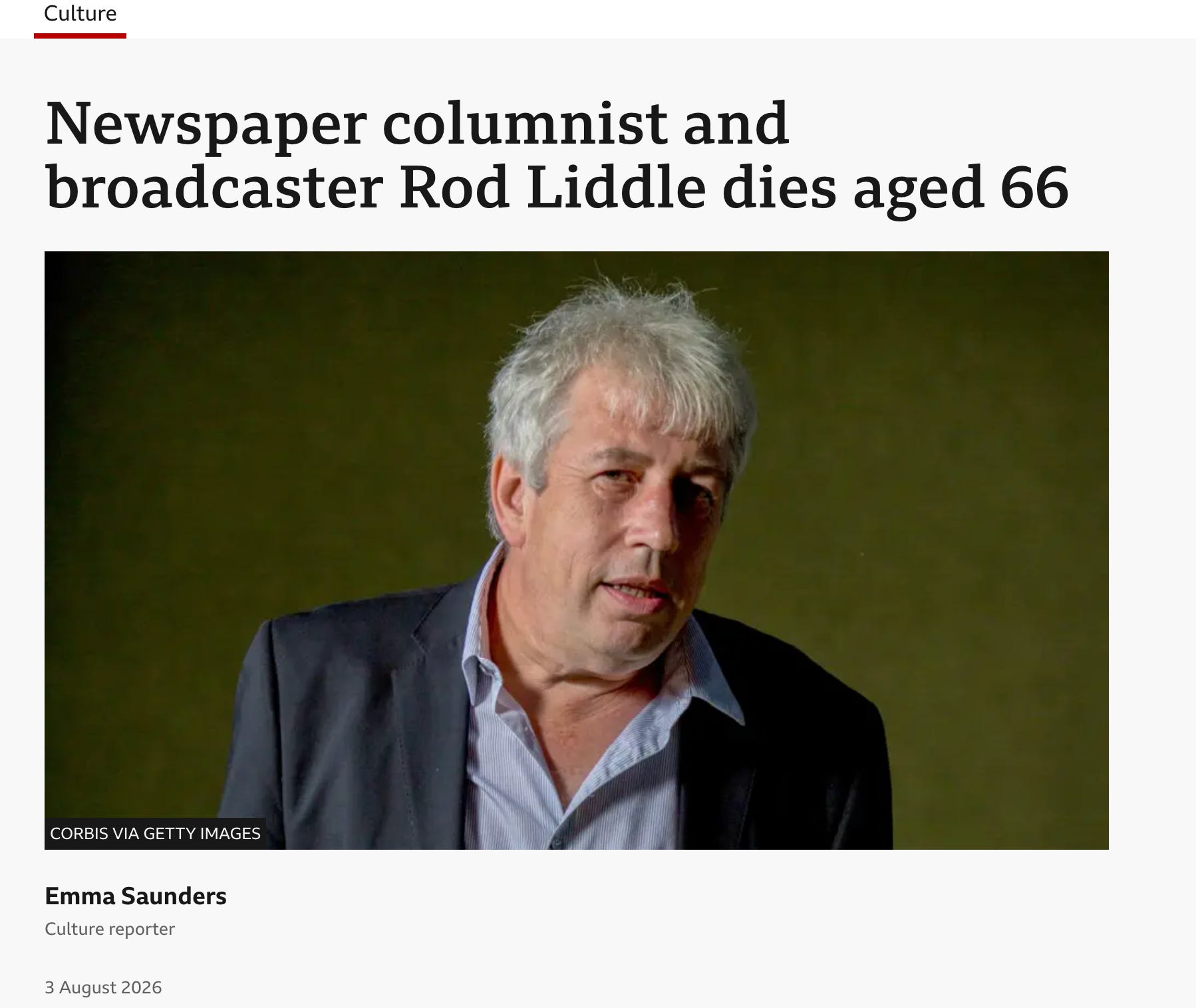
Mic Wright sums up Rod Liddle’s (racist, bullying, hate-filled, sexual assault adjacent) writing career, since he just died and is being eulogised by figures on the Right as some kind of Orwell-like genius. Oof, the gross irony of these two news items co-existing on the BBC News website, where the latter sidesteps his comments compounding the former —
potato gems
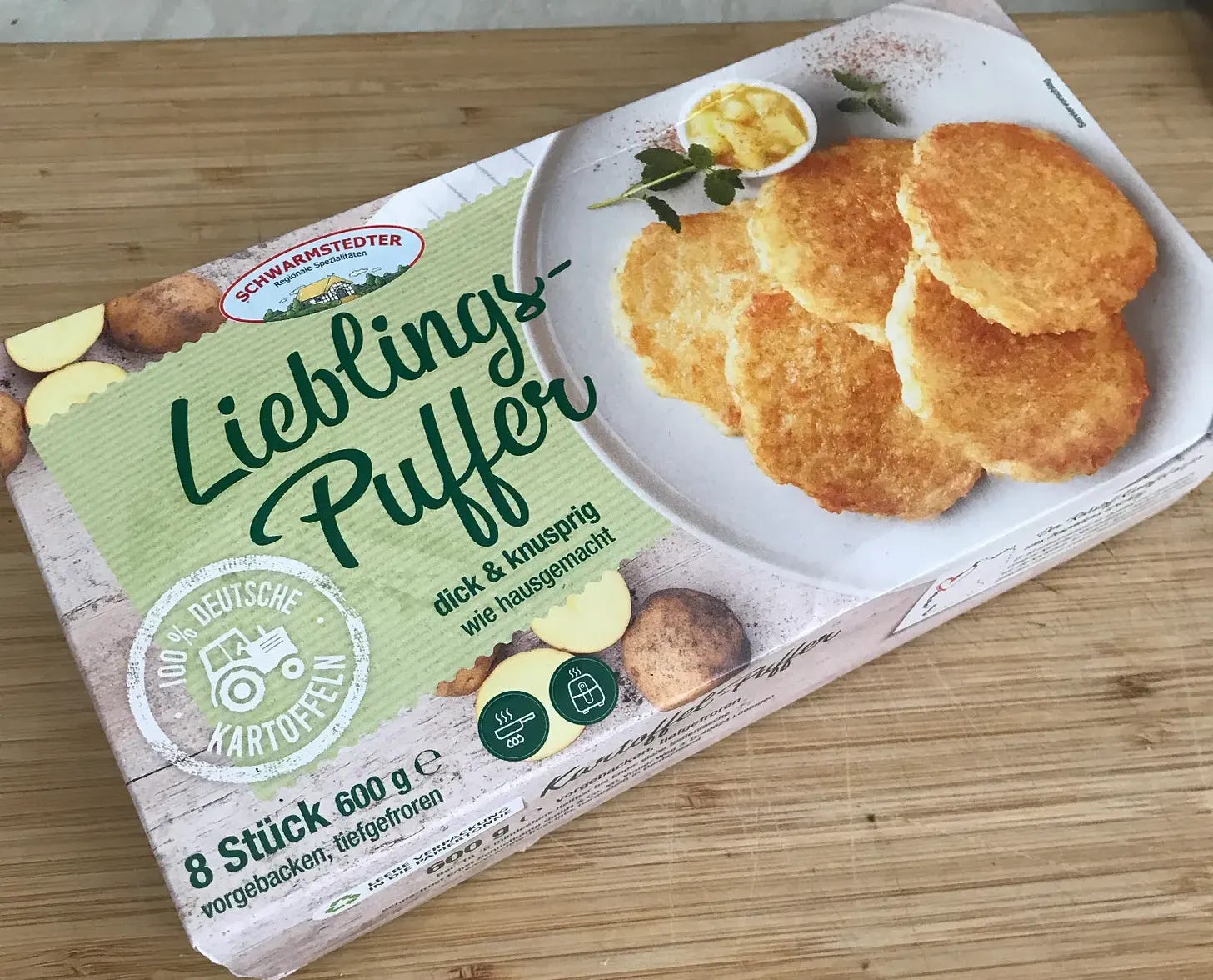
• German supermarkets have these ace things, kartoffel puffer, pre-made rostis you heat up. I wonder if I can find them in the UK.
• After a month and two heatwaves away — not to mention the baby gulls that ended up trapped in our yard while we were gone and wrecked it — I wasn’t optimistic about my yard-grown potato harvest but I’ve dug up a few and they’re delicious.

•
Notes from Berlin
— the edge becomes the middle
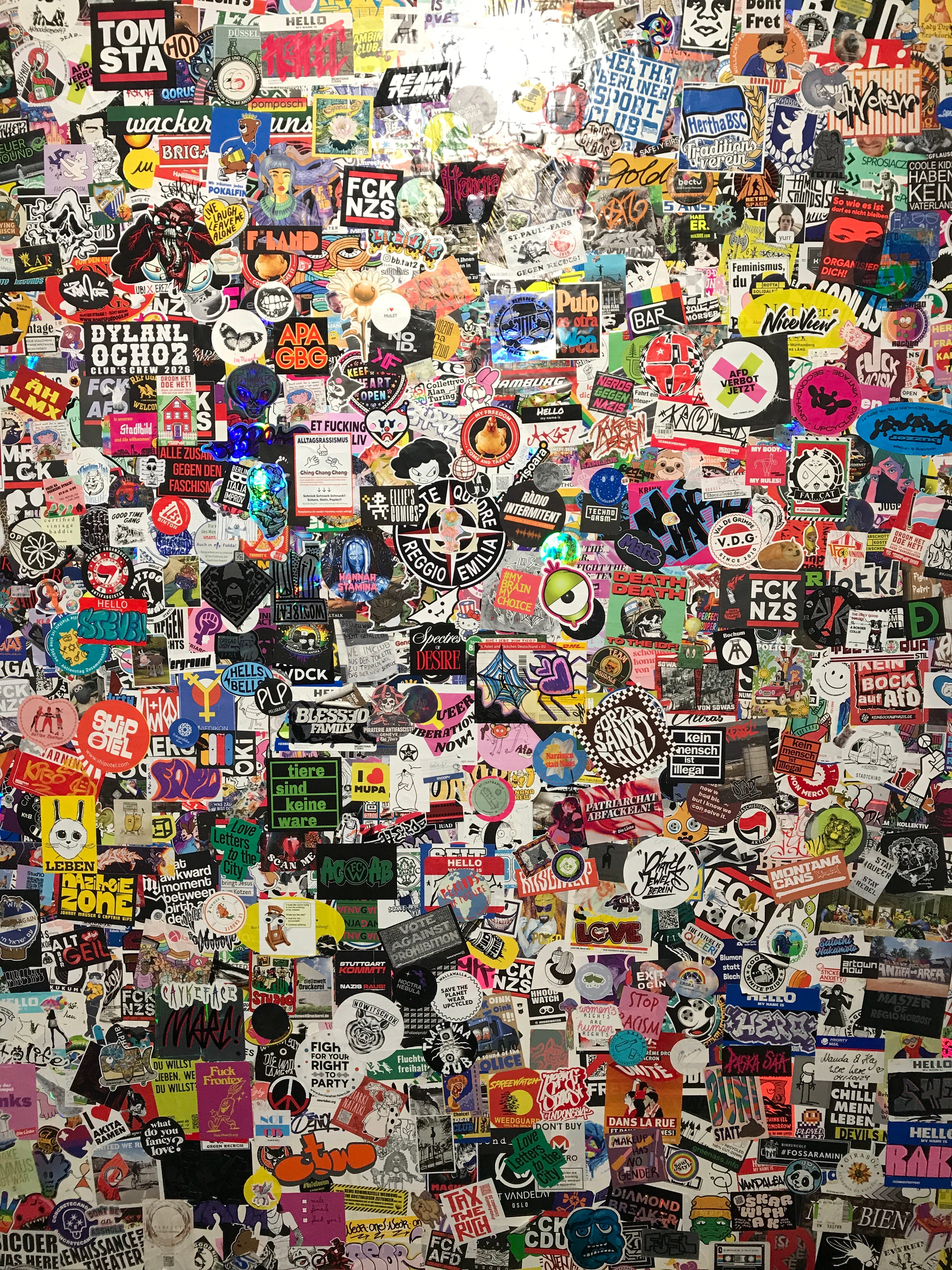
Berlin is like if you took four Brightons, or a nice pair of Bristols, and spread them thickly across a flat desert city of three million people, who’ve come through some bad shit. The layers of counter-culture mingle hard. The anarchy revival is real. A city of stickers and graffiti. I thought it might’ve lost its magic but it hasn’t. If anything, it’s more pronounced and potent, set against the uglier world of the mid 2020s.
The Germans prefer Hamburg.
•
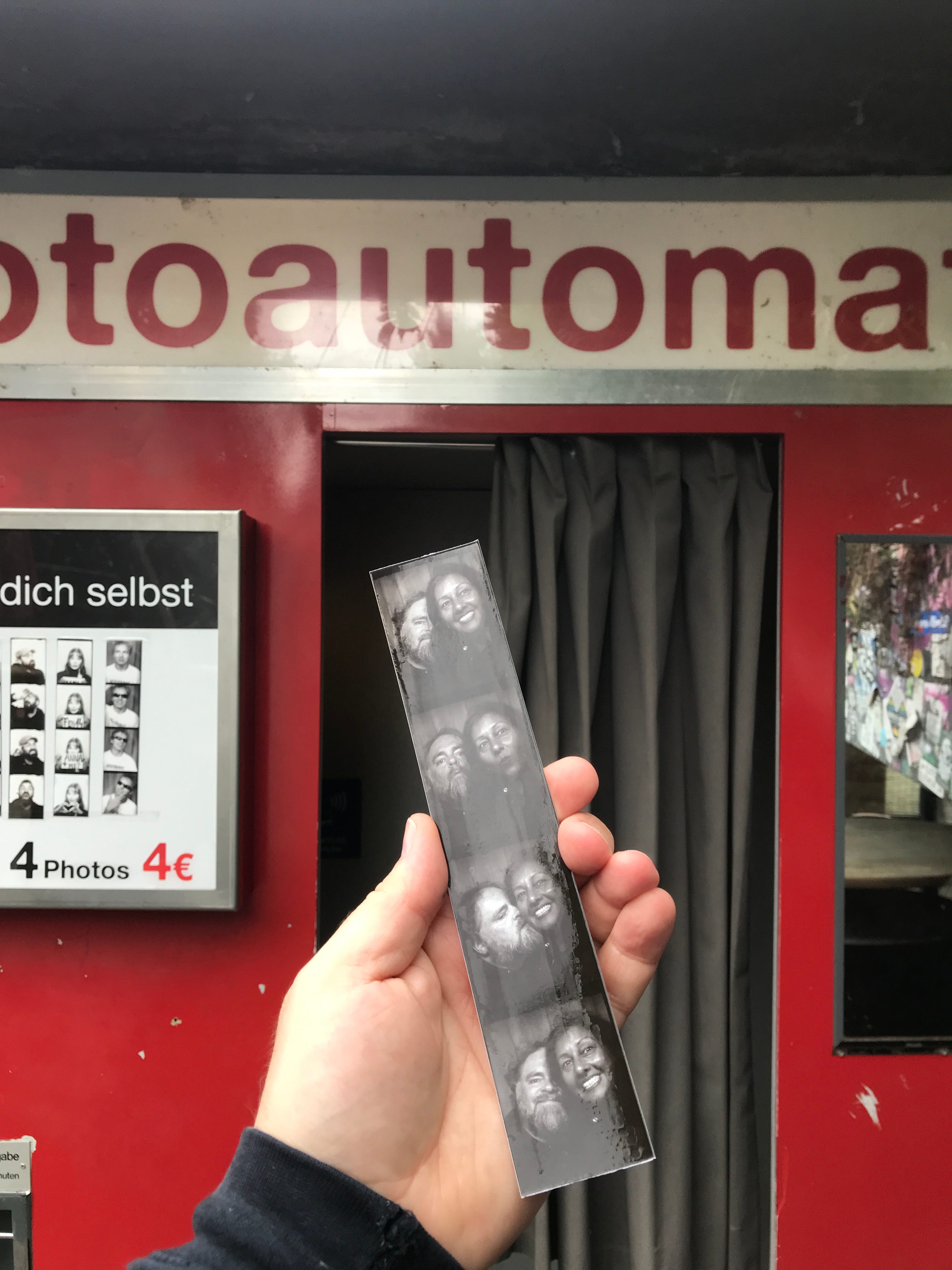
Booze is cheaper but records and especially books are more expensive. Books are so pricey, it’s infuriating. One wants to support these beautiful little indie bookshops, where they make you welcome and take photos of your wife for their Instagram. One wants to not cheat, going home and buying online. But it’s a lot.
•
Appropriately for Berlin, you don’t just get still or sparkling water here, you can purchase varying degrees of fizz in your bottled water. No binaries. Soon after arriving, unexpectedly I switch allegiance from still to sparkling, buying gallons of the stuff without knowing why. I wonder if this will last.
•
It doesn’t matter what type of venue you’re in, high end restaurant, socialist feminist bookstore, coffeeshop, posh wine bar, famous tourist spot, even national gallery or museum, the toilets will look like you’re in an indie rock club.
•
Stickers and graffiti.
•
Sunday trading is still a thing here. We’ve been caught out a couple of times because all the supermarkets, even small ones, are closed on Sundays, only tiny grocery shops remain open. Sunday is a vibe.
•
The police sirens’ nee-nah nee-nah sound very old fashioned, quaint, like out of a French New Wave film. Cops are hard as nails though. You won’t see fat cops, like in Britain or the USA.
•
This summer at least, Berlin still has wasps. A lot of them. It’s the one big downer of being here. The bakery we fell in love with early doors, Albatross, where I had my best pain au chocolate ever, we’ve ended up avoiding altogether. There are many smaller places like this where, for these hot weeks, they’ve inevitably had twenty wasps noodling around inside, which is too much for me. I’m less bad with wasps than in my youth but enough already.
I know, climate crisis. Still, wasps can do one.
There are grasshoppers too, though that may be where we’re based, which is opposite a large park. We saw a hedgehog in the park. That’s two hedgehogs I’ve seen in two years, after twenty years of not seeing any. Rifa says she hasn’t seen one before but she’s not that bothered. Then a grasshopper makes it up to our balcony on the eighth floor. I can’t remember the last time I saw one of those. Two weeks later, back in the UK, I’ll be visiting my Mum and Dad, and a grasshopper will jump through their back door. Weird. Probably it’s the same one, obsessed with me.
•
The best echo in Berlin is in the foyer of the Energieforum Berlin offices, opposite Ostbahnhof, down the road from the Eastside Gallery. I don’t think it’s meant to be a public space though — we walked in by mistake, thinking it was a shortcut to reach a riverside walk to Holzmarkt 25. It wasn’t and didn’t. You enter through an odd tubular tunnel-like entry way, with its own interesting reverb. But once you’re inside the vast, vaulting, high ceilinged glass lobby space, devoid of humans or furniture, the echo is peerless and sepulchral: a quick slap-back, overlaid onto a huge, long, warm reverberation, which somehow mellows the top frequencies but otherwise lasts an astonishing amount of time, several long seconds.
Literally: a Berlin tourism (or sound recording engineer) tip that you won’t find anywhere else, in any other publication, I guarantee.
•
Where have the poo shelves gone? Last time I was in Berlin, almost a decade ago, quite a lot of (older) toilet bowls had that disconcerting little shelf down in the bowl, for inspection before flushing. It’s a classic German thing, right? Except, this time I haven’t seen a poo shelf anywhere. None. Deutschland has finally turned its back on poo inspections.
•
I like the abundance of German words that fly close to the word ‘cunt’. ‘Art’ is ‘kunst’ for example, so a gallery is often called a kunsthaus. See also ‘fart’, since ‘fahrt’ is ‘drive’ and ‘fertig’ is ‘finished’.
Here, a fart has a sense of an ending. Especially if you find a place with a massive echo.
Also, ‘Town halls’ are ‘rat houses’. They must know.
•
When I get back to the UK, I’ll visit my dear friend, the Hampshire author and music promoter Oliver Gray, who was my German teacher at school. Almost everything I’ll tell him about our Berlin trip will include something I pronounce incorrectly. Basically, I’ve been saying everything wrong the whole time.
Luckily, everyone speaks near-perfect English.
•
People here don’t actually like Berghain that much. There is a popular ‘FCK BERGHN’ sticker.
•
I like that older men in Berlin can be sexy. There’s a swathe of tall, mostly rake thin, alternative guys, punks and ravers, who stride (or cycle) around town in leather trousers and tight tees, absolutely confident of still having it going on into their sixties.
•
In the near-decade between our visits, the vegan revolution took place. When you return to a city you haven’t visited since that revolution, you really notice it, much more than at home, where it’s gradual. Last time, my friend Stephen tipped us off to this vegan Vietnamese place near Hermannplatz, and we loved it, simply because it was a Vietnamese place with good fake meat — and we’d not encountered such a thing.
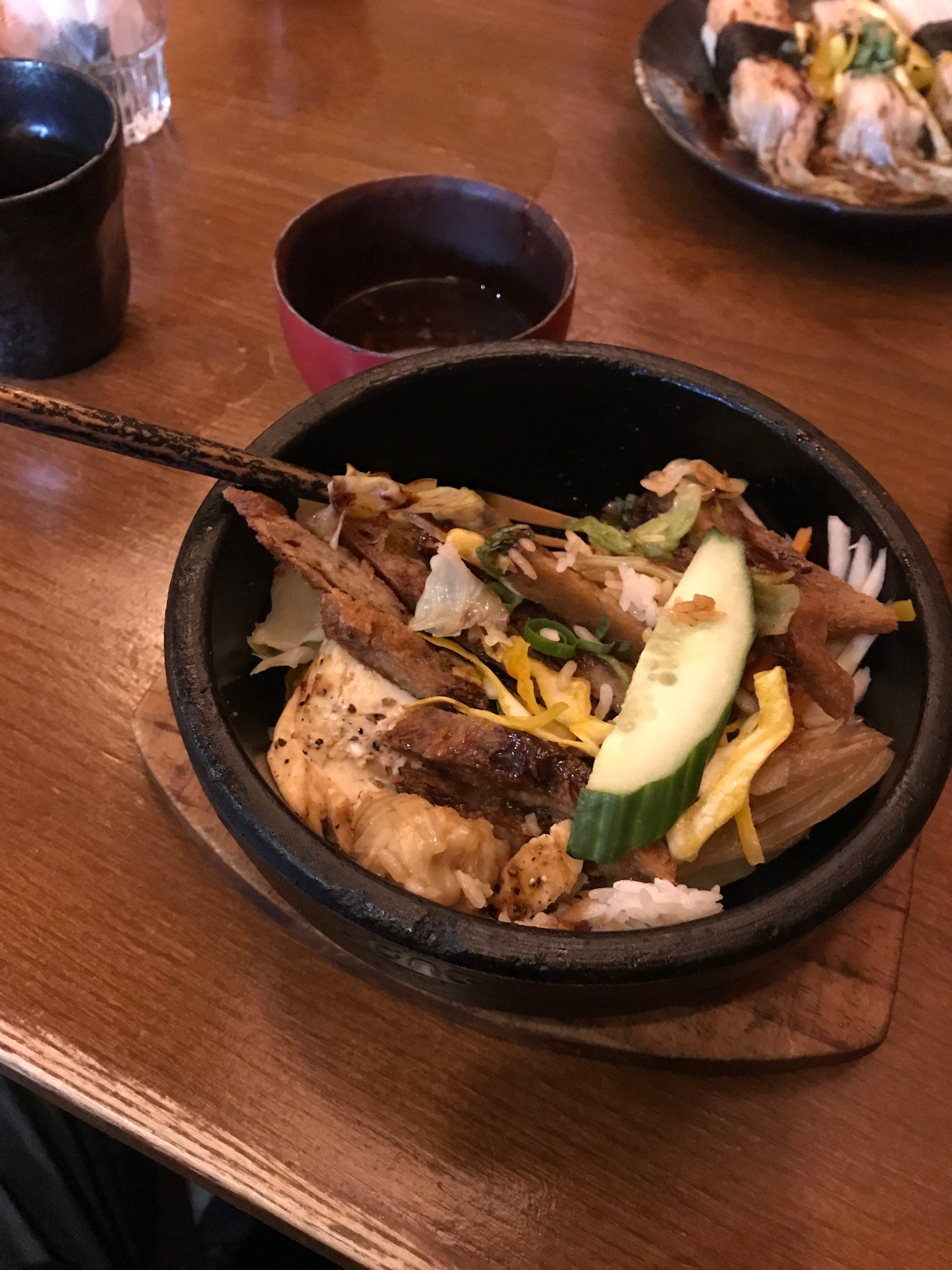
Today, Berlin has vegan Vietnamese places everywhere and non-vegan Vietnameses offer vegan options. Chay Long. Con Thỏ (which means ‘rabbit’ in Vietnamese). Hung Ahn up in Mitte. Tianfuzius in Schöneberg (so hip we can’t get in any evening this month). Back home, of course, there’s an award-winning, barnstorming plant-based Asian place about a hundred metres from my house, Bonsai Plant Kitchen. So I don’t know why I’m excited.
But… fake crispy duck with vegetables in a spicy mango sauce with scorched jasmine rice, oh my fucking god.
Before, traditional German sausage-based lunch was entirely off our radar. Now, even those old school places do a veggie sausage version.
•
I can’t for the life of me understand why the UK doesn’t do ‘pfand’, that is, a small refund when you return your empties. It’s long been normalised and fully automated across northern Europe and North America. Supermarkets in Germany have a machine that swallows empty glass bottles and spits you out a refund token to spend in the shop. Some small indie markets will only take the bottles they themselves sold you, but the big supermarket machines guzzle anything. In the olden days, British places used to do it too (by hand, pre-automation) but now we don’t bother. One reason this is stupid is, it feels nice — and you know how obsessed supermarkets are with getting us to feel nice when we’re in there. You feed your bottles into the machine, get a little bit of money (anything from 7p to 40p per bottle, quickly adds up to a couple of quid if you take back a full bag) and you’re in the exact right place to spend that money. Pfand is satisfying.
•
There’s something pleasingly phallic-friendly about the culture. Perhaps it’s that love of sausages.
See, for example, Ampelmann, Berlin’s unusual version of the ‘green man’ character on pedestrian crossing lights. He’s a markedly different design to most of Europe’s boring ‘green men’, with more personality (and a hat). This was apparently deliberate to help engage children and improve road safety: Ampelman was developed in Communist East Berlin in the 1960s. After reunification, with iconography of the old East being systematically eradicated, public affection for Ampelmann was a focal point in discussions about things worth saving. Thank the gods he survived, because he’s now one of Berlin’s hardcore branding symbols.
But nobody seems to mention how he looks a bit like he’s got a gigantic boner, proudly striding across the road. Not on the merchandise versions, because once the image is sharpened into print, that’s obviously his arm. But on the actual pedestrian lights themselves, glowing blurrily green, it definitely looks like a massive dick. Even that name ‘ampelmann’, which I took to be a deliberate euphemism, in fact translates as something like ‘light box’, so it’s a coincidence he comes off ‘well endowed’. Surely they know.
The branded merch shop for Ampelmann has six branches around the city, so he’s super popular.
•
We were going at a tortoise pace, until our friend Tim Cam Man showed up. He’d not done Berlin before, so suddenly we were piling through it, resulting in an epic couple of touristy days, also coinciding with good bits of football, watching on big screens, incomprehensible commentary, stood with crowds outside mid-evening ice cream parlours, and sitting at dark wooden corner tables in low ceilinged bars where nobody was too bothered but they kept the telly on anyway.
•
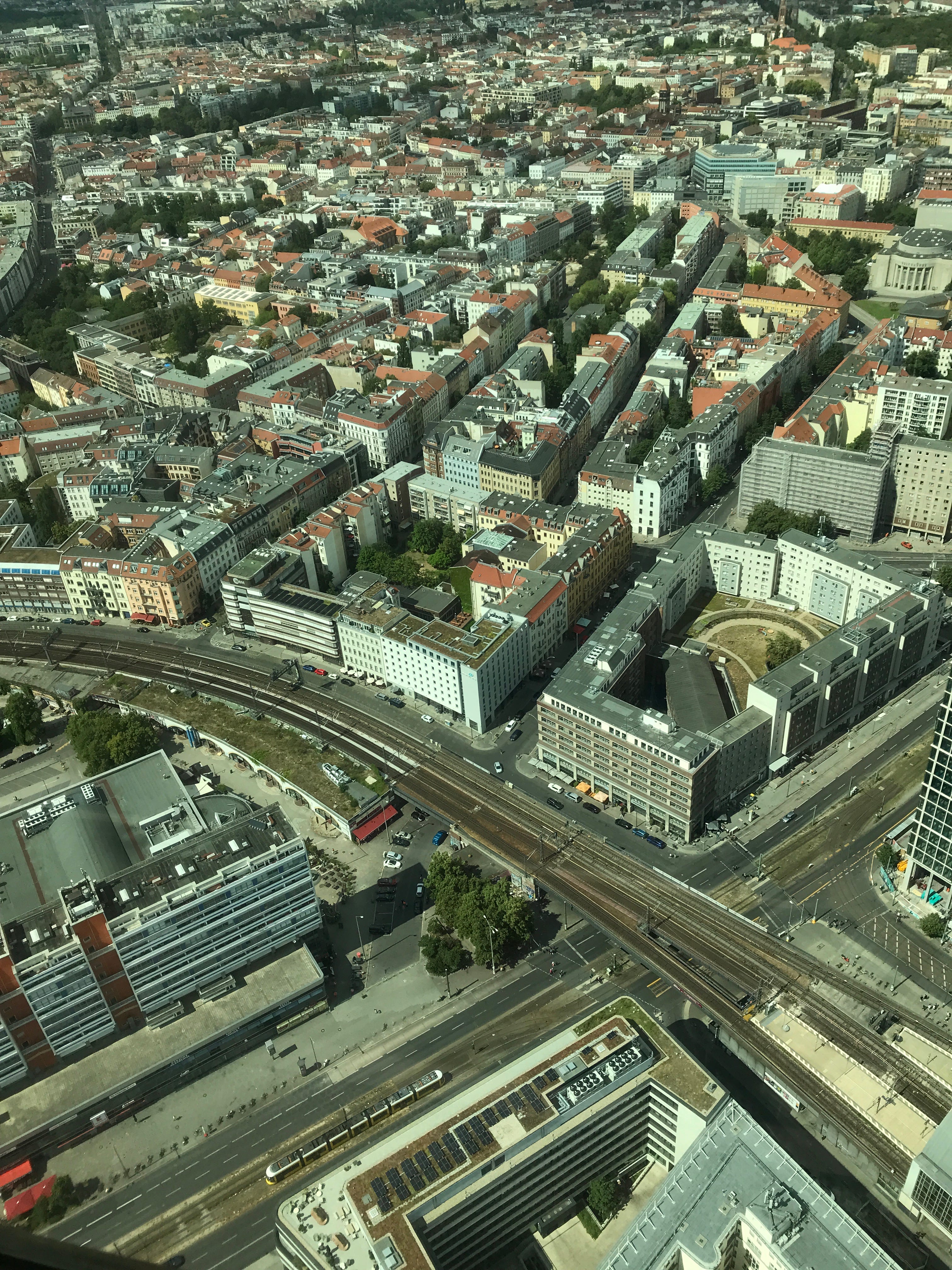
I’m not one for height-based tourism. I’ve never been on the London Eye, or the i360, or Eiffel Tower, or up the Empire State. But with Tim we do take the elevator up the Alexanderplatz TV Tower. It has a digital speedometer in the lift, because it’s famously fast. Originally this was the East German government spy centre, now it’s a viewing platform with a restaurant on the floor above.
Turns out I do like looking down at the world from a great height. Who knew.
Coincidentally, in the weeks before we came away, for some reason I’d been obsessing over YouTube videos of elaborate train sets. Whatever that triggered in me, this does too.
I must find a way to write something about the ‘pirate junkyard’ aesthetic in placemaking, in pop-ups, outsider leisure and entertainment sites and especially in connection to anarchist, anti-establishment ideas.
This isn’t at all exclusive to Germany, but obviously, chunks of modern Berlin are rebuilt from literal ruins of the city after WW2 — and again after the Wall came down in 1989. Many of the best spots we’ve encountered embrace the wild pirate ‘thrown-up’ aesthetic, organically or artificially.
Queer visibility here is very heartening. Regular marches, niche demos, venues and shops and spaces, tons of cultural leadership, as well as major areas offering a highly visible welcome. Over a century ago, Schöneberg was one of the first openly gay districts in Europe, and maintains the vibe, proud of that part of its history. Also, it has a great hundred year old hot chocolate shop, Winterfeldt Schokoladen (as distinct from the indie rock club Schokoladen in Mitte, where we just saw Golden Disko Ship smash a hometown headline show).
•
That said, I write this in the shadow of the awful attack on Berlin Pride. The feeling of a city reeling, as well as mourning, pushed off balance, hopefully briefly, before recovering itself, has been intense and tough in the days afterwards.
In a week’s time, back home, I’ll walk down our street to watch the parade at our own Brighton Pride, with an overwhelming rush of its sheer importance and of LGBTQIA+ courage, everywhere. Down the other end of our road, a large truck will be parked sideways, blocking the route back in to where the parade passes by. It will be nondescript, unheralded, just in case.
•
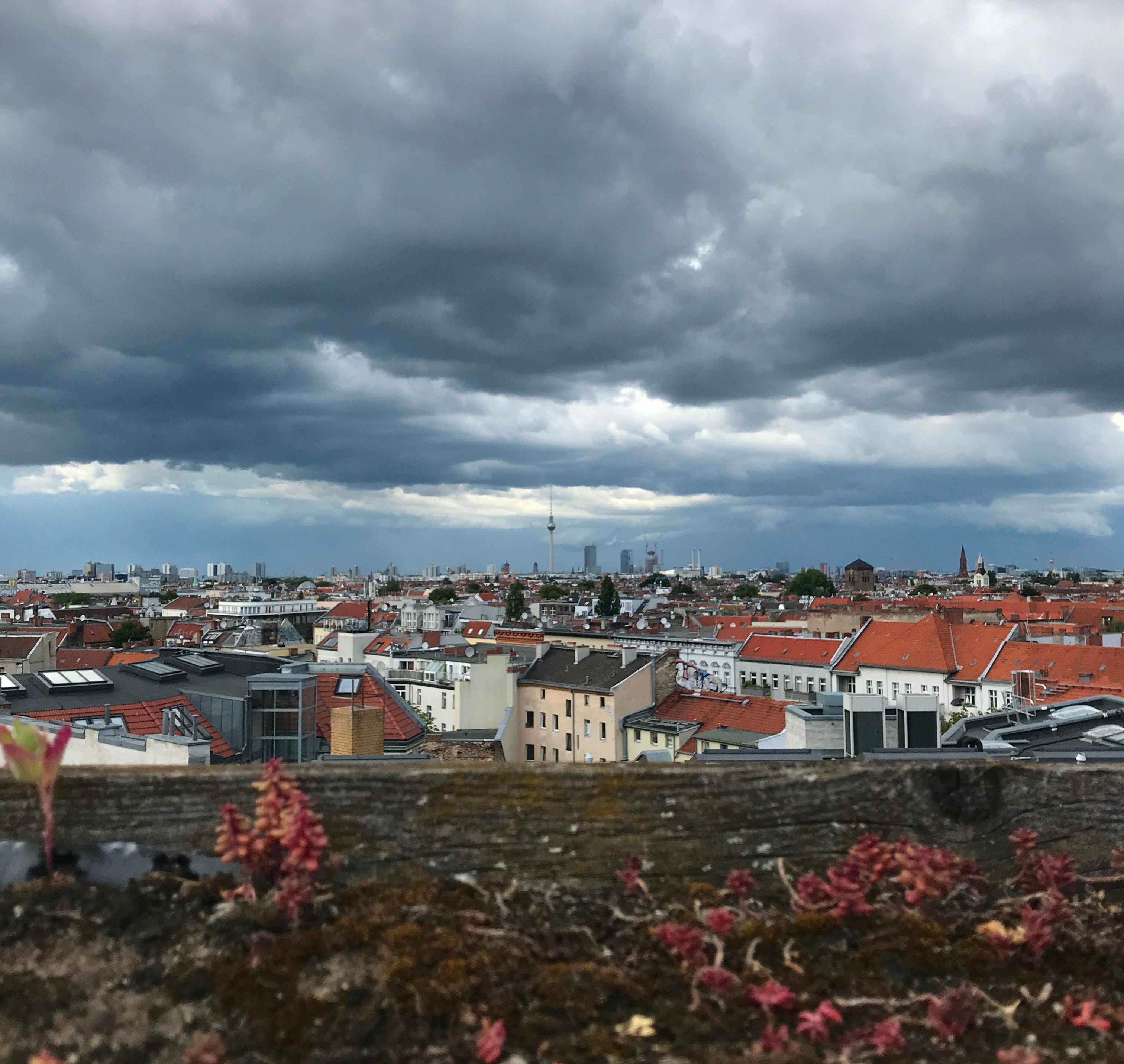
Since 1990, over thirty-five years Berlin has slid from being one kind of liminal mirage of a city to another, from out on the edge of things, a frontier island, a key negotiated Cold War front-line, enemies swapping their people at Checkpoint Charlie, to the centre of things, a major European capital, financial hub, home of a government, replete and rebuilt.
Inside Berlin, the neighbourhood we’re staying in, Kreuzberg, also took the same journey in miniature: during the Cold War it was half-abandoned, certainly forgotten by the establishment, a multi-cultural, impoverished, radically progressive corner of West Berlin. Once the Wall came down it instantly became prime, relatively central, real estate. The district’s resistance (and occasional acquiescence) to gentrification forms the backbone of its history over the past three decades. It retains a lot of edge, despite a reluctant journey into the middle of things. That story can be witnessed, street by street.
•


•
Few cities would’ve managed to reject developers building on the enormous Tempelhof former airport site and kept it as an open, common-held, social space. Berlin has. Though corporate vultures still circle.
I must write something separate soon about street art, both its radicalism and — in certain senses — its absence of radicalism. Like everywhere, Berlin is struggling to adequately address Israel’s atrocities in occupied Palestine, including here in subcultures where we’d assume, as Brits, that it might be unified. I’m thinking of the German hard left, which is unexpectedly divided on the topic. There’s long been a sizeable Zionist hard left presence in Berlin. Beyond that, obviously, generational guilt over the Holocaust and subsequent built allyship with Israel. So right now, it is clearly difficult for some people here to acknowledge the depth of that country’s depravity and the scale of mass murder, deliberate targeting of civilians, children.
Of course, many countries have a pro-Israel corporate establishment, cracking down hard on a counter-culture that calls for a free Palestine. That’s true here in Germany. The vicious over-punishment of protest — especially direct action — is as prevalent as we’re seeing in the UK, sickeningly blatant misuse of laws, in defence of overseas arms manufacturers. Different phrases are criminalised. Shamefully, before coming, I temporarily covered up a sticker on my luggage, since in Deutschland it has phrasing that risks arrest. In the UK it’s a different phrase, “I support Palestine Action”, that you cannot use.
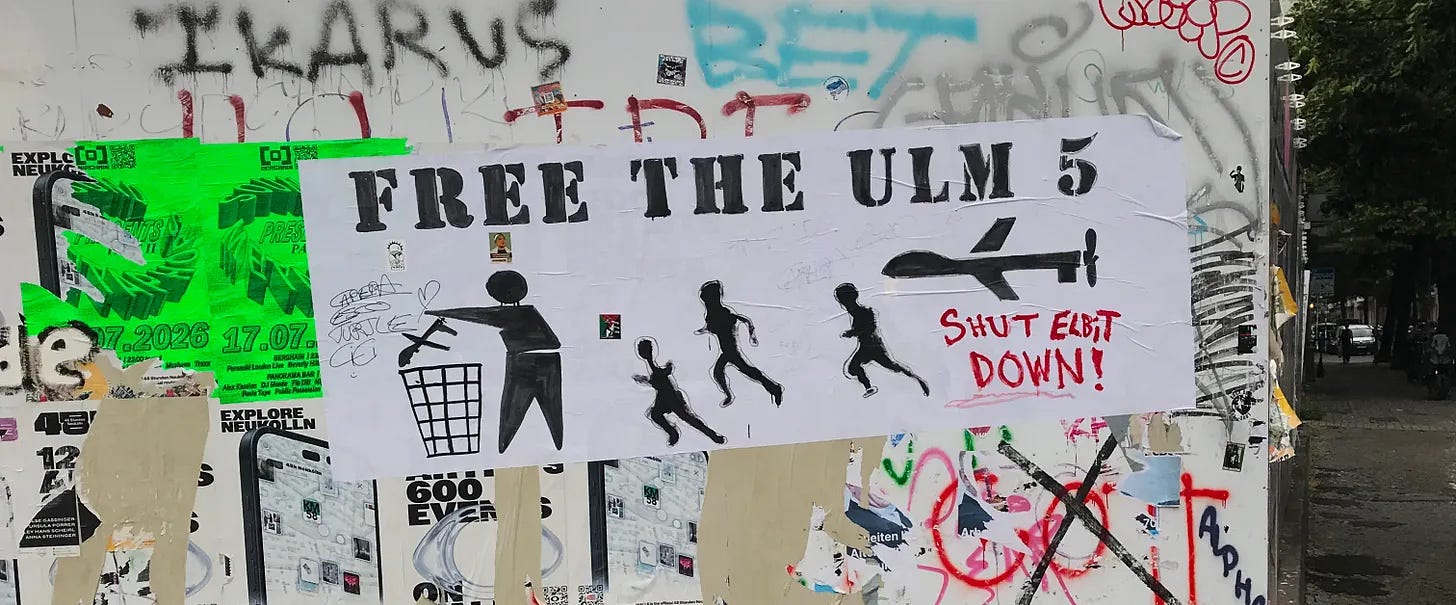
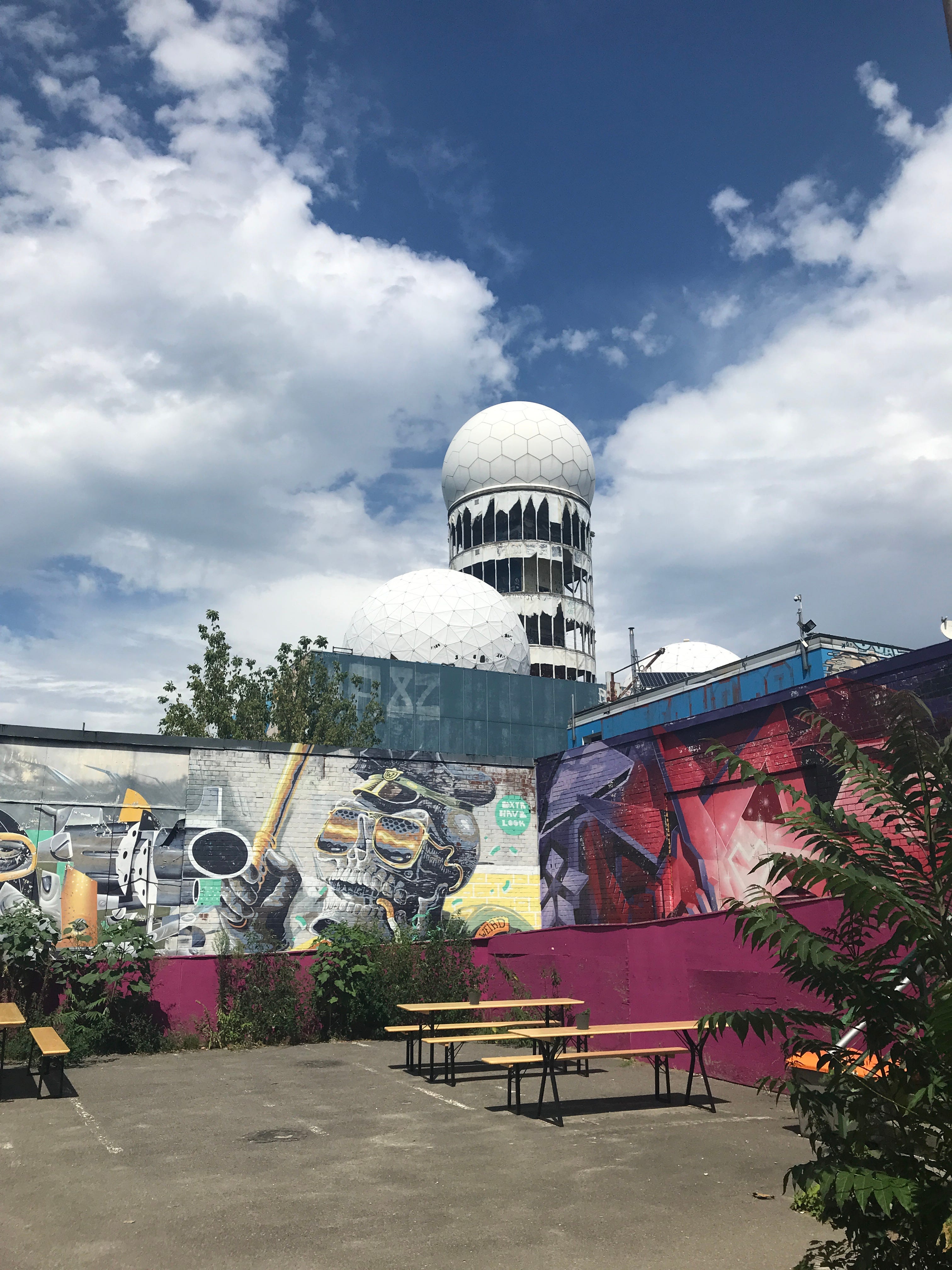
Meanwhile in Berlin, we see (often overtly racist and violent) pro-Israel graffiti, almost as much as we see graffiti for solidarity with Gaza and the West Bank. Indeed, certain more established street art sites here (Haus Schwarzenberg, very disappointing overall art-wise, or Teufelsberg, which is otherwise an incredible experience) are virtually devoid of pro-Palestine content, even where they have substantial pro-Ukraine content, for example. The absence speaks volumes about how controlled, or at least, curated, these supposedly liberated, individualist spaces are.
The one mention of Gaza I saw throughout the whole of Teufelsberg was in the loo. The art there is gorgeous and on a vast scale, but the overall messaging level is bland, full of banal, dumb-arse self-help, Coldplay lyric type tropes and a drilled-in heteronormative casual sexism. Once you’ve seen it, you can’t unsee.
•
It’s easy to forget quite how far to the east Berlin lies, on its great plain, with its lakes instead of the sea.
•
Overall, I don’t think Establishment Berlin tells its political history at all well, to the point that much of it slips into naked propaganda. I must write about this properly, another time and not get too deep into it now. Big, important museums, DDR Museum, Mauermuseum, others, despite a wealth of brilliant exhibits, offer remarkably weak attempts at neutral museum-style documenting, using labelling and explanatory text that comes off more like op-ed in a right-wing magazine.
These stories they tell are compelling and important. Mauermuseum has incredible artefacts and witness testimony from people who showed immense courage and trickery to escape the East. The villain is, unequivocally, a villain. So they don’t need to editorialise, exaggerate, or weave false equivalencies. Yet sadly, the rhetoric jammed into the texts often goes beyond legitimate unpacking of a horrible period of authoritarianism. It reaches the point of parroting one ideology (USA-led western capitalist imperialism) and attacking others (even moderate socialism).
In Mauermuseum, Jimmy Carter = weak, Ronald Reagan = great. End of.
The result is cringey inconsistency in tone and narrative. For an outsider, used to (on the whole) reasonably high quality UK museum and gallery exhibit labelling, the biases are laughable and horrifying.
•
There’ve been a few very hot days but nothing like the heatwaves you’re getting in England. Also, when it’s hot it’s a dry, desert-like heat, not so close or humid.
•
I remember, the previous time I was at Mauermuseum, in the late 2010s, I’d just come out of it very inspired, when in the shop they had a big poster up eulogising Henry Kissinger, who’d been patron for an event or a project they were running. Through the Wall years, the villain of Mauermuseum, the Stasi, is estimated to have killed 2,200 people. When he illegally expanded the Vietnam War into Cambodia and Laos, Henry Kissinger killed at least three million people.
That’s no ally.
•
The pull to freedom here in Berlin isn’t party political. It looks up and down, rather than left and right, so people unite equally, refusing to comply to state over-reach and refusing to comply to corporate invasion. Inevitably that will get complicated and messy — it’s not always going to lead to the outcome that suits someone with my politics — but it’s very admirable and we can learn from them.
•
I don’t really want to go home.
•
get in touch
email me: chris@christt.com
Instagram: cjthorpetracey
always there
• Sort out your ‘art life balance’ with a conversation to help reset your creativity: check out my face-to-face sessions
• Double Chorus about songwriting and the music industry (irregular, casual)
• Refigure podcast, bitesize arts review show I make with Rifa
• I host The Old Market podcast, interviewing brilliant artists each month
• Two vintage Chris T-T LPs: London Is Sinking (2003) and 9 Red Songs (2005) for the first time on 12” vinyl, limited stocks still available
• A bunch more T-T albums on CD: Love Is Not Rescue (2010), The Bear (2013), 9 Green Songs (2016) and Best of Chris T-T (double CD, 2017) all available via Bandcamp
• My Pact Coffee discount code is CHRIS-A8UKQG. Sign up for beautiful coffee bean delivery, use this code, you get £5 off, and I get £5 off a bag too
Thanks again, please look after yourself and your people
all my love,
Chris
x
Great review of one of the great cities, I would love to live there for a while to understand if all those things I, and you it seems, love about it are real.
I liked that in the parks round where I stayed in Mitre, people left empty bottles in bunches for the homeless to take and collect the refund. Sometimes it's the small things.
Lovely bit of writing. Berlin fascinates me, but I have never been - but in literature, music, even in old maps I am happy to explore it. I like the 'pirate junkyard' idea. It was there in Brighton in the 1990s, in Margate in the 2010s. I never found a way to make it happen in Worthing.